


Tomorrow, a lot of folks will walk to their local elementary school or library or church to vote. They’ll cast ballots for a whole host of candidates and policies, as folks do every two years. Most national elections feel important, because of course they are, but the 2026 midterms feel more consequential than pretty much every non-Presidential election I can remember. There’s a reason for that, and it goes beyond the failed and dangerous policies of the Trump Administration.
For the first time in many decades, Americans will go to the polls tomorrow with a clear-eyed belief that they’ve voting not just for one party or another, or one policy or tax or what have you, but for or against a system of corporate control that has increasingly hurt their ability to make ends meet, encroached on their homes and communities, and robbed them of local control and democratic power. This election, more than any other in modern times, will decide whether Americans can reclaim their economic and political fate from the grip of corporate monopolies.
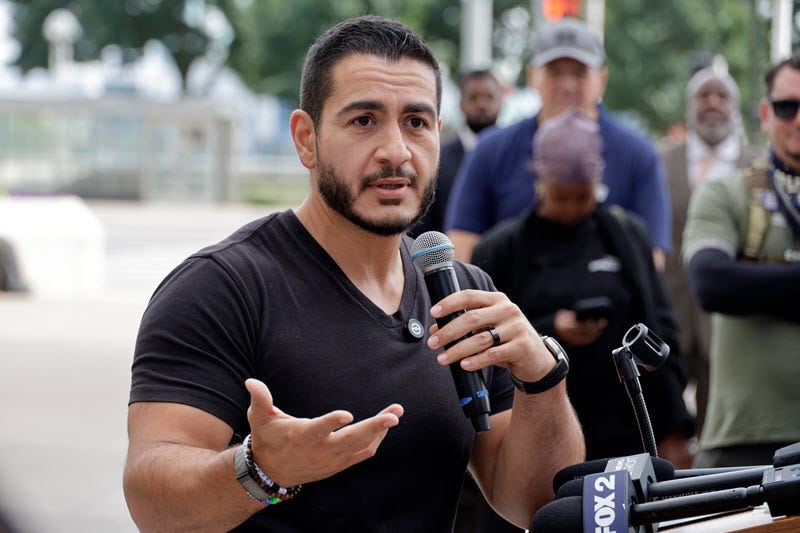
“Monopolies and oligopolies,” Michigan Democratic Senate candidate Abdul El-Sayed told CBS’s Ross Douthat on 60 Minutes this weekend, when asked what his economic priority would be in the Senate. “I’m a capitalist. If you read Adam Smith, he’ll tell you, the biggest risk to capitalism was never government regulation. It was monopoly and oligopoly.”
Why are things like antitrust and monopoly even on the minds and tongues of candidates and elected leaders, who have rarely so much as uttered the word “monopoly” for generations? It is, maybe obviously, because of what’s on the minds and tongues of voters, many of whom have abandoned the culture wars as they instead worry about whether their next paycheck will afford them both rent and food. This election has become a referendum on corporate power because people can feel and experience the ways powerful companies impact their lives, they despise it, and they’re seemingly willing to reject any candidate that appears beholden to it, be it Big Tech, Big Ag or otherwise.
If this is indeed a wave election, as many pollsters predict, corporate monopoly will be what the wave crashes against.
The candidates that can most clearly identify the dangers of monopoly and have the best-articulated plans to stop it appear poised to win tomorrow. El-Sayed and other candidates have taken a stand against monopoly power because they can see clearly the connection between dominant corporations and the struggles of folks around the country. Roy Cooper, the Democrat’s Senate nominee in North Carolina, has built his campaign on a platform he calls “Make Stuff Cost Less.” His solutions to high prices take aim at corporate concentration. For example, he’ll fight high grocery prices by using antitrust to stop bad mergers, and by ending algorithmic pricing and price-fixing to restore real competition to the industry. James Talrico, running for Senate in Texas, has laid out a broad economic plan that attacks “an economy that rewards wealth instead of work.” Platitudes? Maybe. But many Democratic and some Republican candidates have made billionaires and the oligarch class public enemy number one nationwide. If this is indeed a wave election, as many pollsters predict, corporate monopoly will be what the wave crashes against.
Readers here understand that data centers live at the heart of American’s modern resistance to corporate control. They’re the physical manifestation of so many American experiences and fears. The AI they generate ends jobs and lowers wages. They steal tax dollars with promises of jobs and economic prosperity that never materialize. They raise our electric bills, flood our air with pollution, and their developers and Big Tech backers pressure politicians to strip away local, democratic control of our communities. And boy are they unpopular.
A Reuters poll this summer found that just 14 percent of people were ok with a data center being built in their community. Half of Americans think AI could cost them or someone they lived with their jobs. Concerns that data centers will raise electric bills is nearly universal — 77 percent — and cross party lines. Folks who publicly identify as Democrats and Republicans, including some former elected officials, are leading data center fights around the country. Americans from every walk of life hate data centers — both what they are and what they represent.
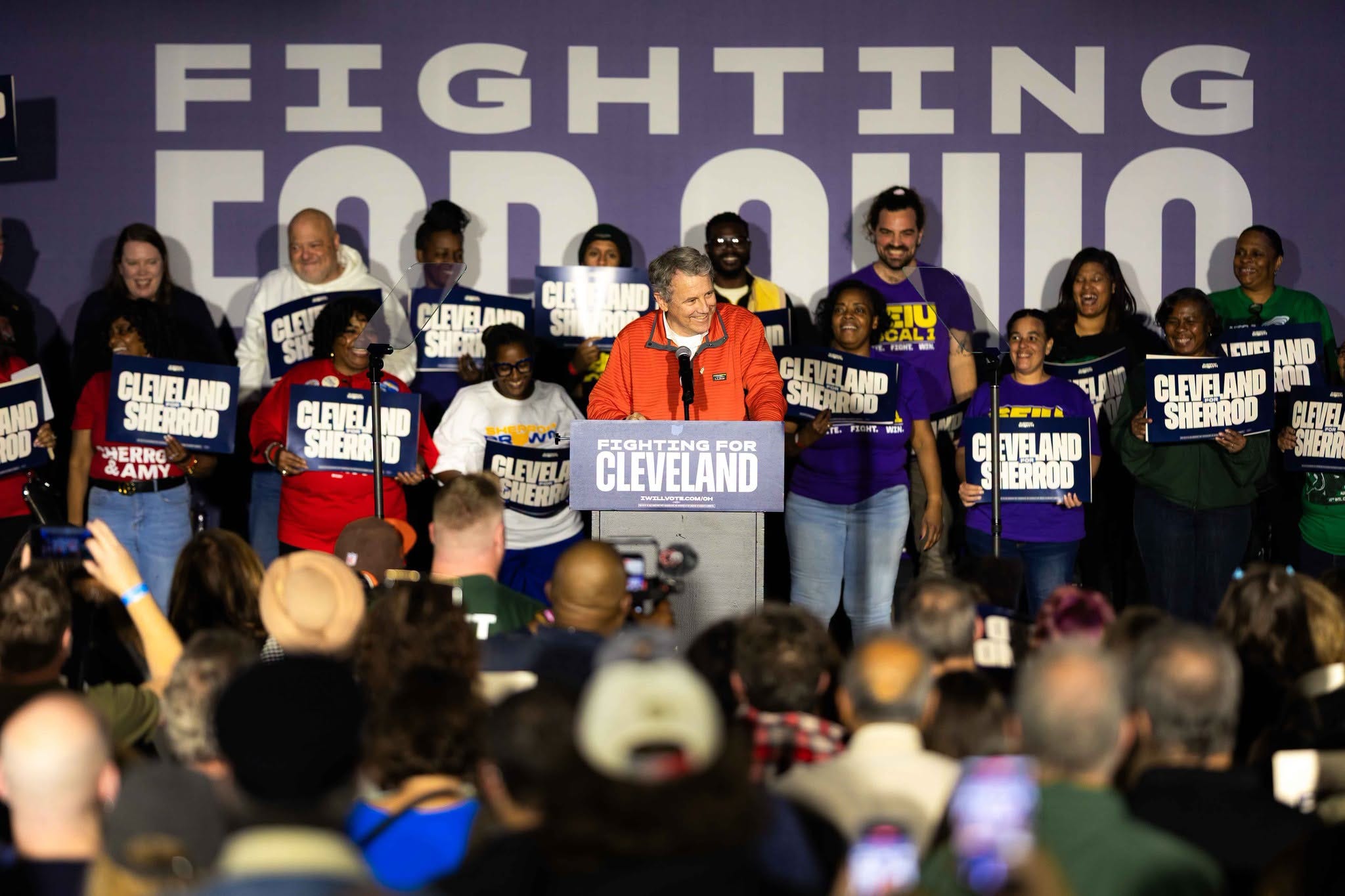
Ohio has been the front lines in the political war over AI and data centers. Sherrod Brown, Ohio’s former Senator who is vying for a return to the chamber, has made data center skepticism a cornerstone of his campaign. At a campaign stop in Lima, Ohio in early October, Brown consoled the audience of farmers and small town residents, who have seen a rash of data centers encroach on their properties and communities amid the hyperscale data center boom. “They eat up our land. They swallow up our water … then once they’re built, our electricity prices go up,” Brown said. Brown has painted his opponent, Republican Jon Husted, as “the face of data centers,” a devastating insult in the year 2026 and a fact that might well cost Husted the race.
Americans increasingly view data centers as not only intrusive and problematic on their own, but as just another manifestation of a powerful corporations forcing their way into the lives and physical spaces of communities that didn’t ask for the and where they aren’t wanted. In my neck of the woods near the Kansas/Missouri state line, organizers have banded together in county- and city-based groups to fight developers and politicians scheming to build out hyperscale data centers. In Tonganoxie, a far-flung Kansas City exurb in Leavenworth County, Kansas, a local organizer named Rebecca Davis is helping to lead a fight against a massive, 1,000-acre data center named Project Bluestem. When I talked to Davis earlier this year, she explained that she learned years ago how to fight corporate intrusions into communities that don’t want them; she cut her teeth back in 2017, organizing her neighbors when Tyson Foods wanted to build a giant chicken plant in town. The community backlash shut down Tyson’s plan almost immediately. Now, the spirit of that fight and the grassroots resistance to corporate power in Leavenworth County and beyond has taken root in data center fights.
Data centers and the rapid expansion of unconstrained AI have animated voters here, but it’s far from the only pocket of corporate power weighing on voters’ minds. In Kansas, farmers and ranchers know monopolies intimately. Corporate giants have cornered nearly every part of the industry, from seeds and fertilizer, to tractors and combines, to processors that buy beef and pork from ranchers. Mike Callicrate, a cattle rancher and longtime antimonopolist based in St. Francis, Kansas, has for years documented the struggles and decline of American food systems under the thumb of corporate control. Today, Callicrate says our food system is more expensive for the consumer, less profitable for farmers, and more fragile than ever.
Monopolies created our food system’s dire state. Monopoly meatpackers robbed ranchers of the ability to make a living raising and selling cattle and chicken, so farms shut down by the thousands. As ranchers liquidated their herds and went out of business, the number of meatpacking plants needed to process beef fell as well, so now those monopoly packers are shuttering plants and laying off tens of thousands of workers. But Trump’s policies have made farming and ranching worse. Tariffs have hurt local producers, and the skyrocketing cost of diesel, driven by the Iran war, has sapped already-thin margins. Earlier this year, Trump tried to push down retail beef prices by opening the US to beef imports from Argentina. American ranchers panicked — and, for some, turned against politicians that supported Trump’s policies. “This is a business decision,” Kansas farmer Vance Ehmke told the local press when Trump visited his state to support embattled Republican Senator Roger Marshall. “I’m a Republican, but I’m also a farmer. And we’re looking at the consequences of those policies to our business and just very, very, very bad news.”
Of course, there are other issues on folks’ minds. The Iran war is deeply unpopular, made worse by Trump’s many promises to extract America from foreign conflicts. Israel’s toxicity, and the binary choice it creates for some voters, crosses party lines in ways that mirror data center opposition. But no American experience is more universal at the moment than getting ripped off by corporate monopolies everywhere and struggling to maintain control of communities and livelihoods in the face of widespread abuses of corporate power. Monopolies have galvanized many Americans against the status quo. Policymakers should continue listening to the people well beyond tomorrow’s election.