


Data centers have provoked ire in a lot of places around the country. Now that anger has found its way to the polls.
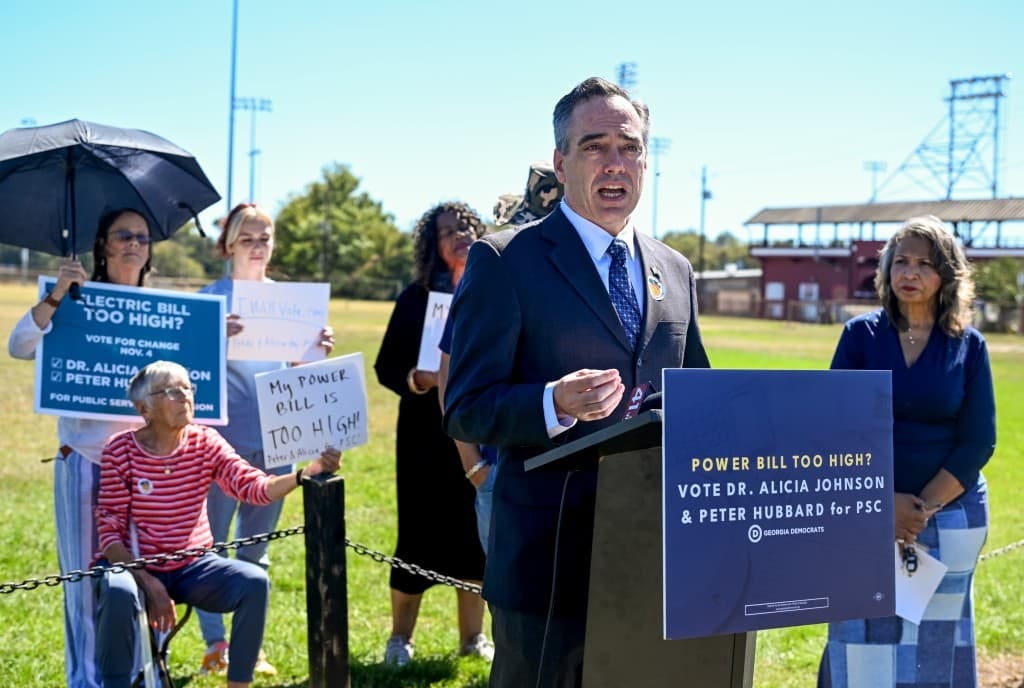
Last month, voters in Georgia and Virginia bucked a lot of political presumptions by voting for candidates who made affordability their calling card and clocked that data centers were seen as being primarily responsible for rising rates, among other harms. It’s no shock that votes went this way -- Virginia and Georgia have been overwhelmingly welcoming to data center projects -- but the results remain staggering. Voters in Georgia elected Peter Hubbard and Alicia Johnson, two Democrats, to positions on the state’s Public Service Commission, which regulates electricity in the states.
They were the first state-wide wins for Democrats in a non-federal race in nearly two decades, driven almost entirely by voter frustration at rising electricity bills and Republicans’ embrace of the data centers sapping the state’s power and control over its own resources. A New York Times story that dropped over the weekend asks a crucial question as we head into the 2026 midterm election season: Will the same anger that convinced lifelong Republicans vote for Democrats fuel a broad rejection of data center politics nationwide?
The Times story digs down into data centers, their impact on electricity prices and the way that’s played out in Georgia. I’ve written about a few data center fights, and the overall arch of the story remains true wherever resistance rises: People are already struggling to afford their lives, and the prospect of a data center showing up and getting an enthusiastic green light from local electeds just to raise their electricity bills drives people to city halls and, increasingly, to the polls to protest.
But again, this is not just about data centers! Vermonters have organized against an Amazon logistics hub, killing Amazon’s plans for now. In rural Arkansas, a typically mundane meeting between lawmakers and local farmers exploded into a 400-person revolt against the monopolization of agriculture. There is something much deeper happening in every corner of the country, and across communities that would typically have very different political affiliations and ideas. Some big, powerful corporation showing up in your community uninvited and strip mining it objectively sucks, and folks from all walks of life get it. Any party that cozies up to corporate power, in either words or deeds, risks the same fate as the Republicans on the Georgia Public Service Commission.
You mentioned how Vermont has organized against a proposed Amazon logistics hub. I read an article this morning about a state senator here in NY who was able to stop a PILOT agreement between Amazon and a county economic development organization for a new Amazon warehouse. He makes some excellent points. Here is the link:
https://www.wamc.org/news/2025-11-26/senator-james-skoufis-praises-veto-of-amazon-warehouse-agreement