


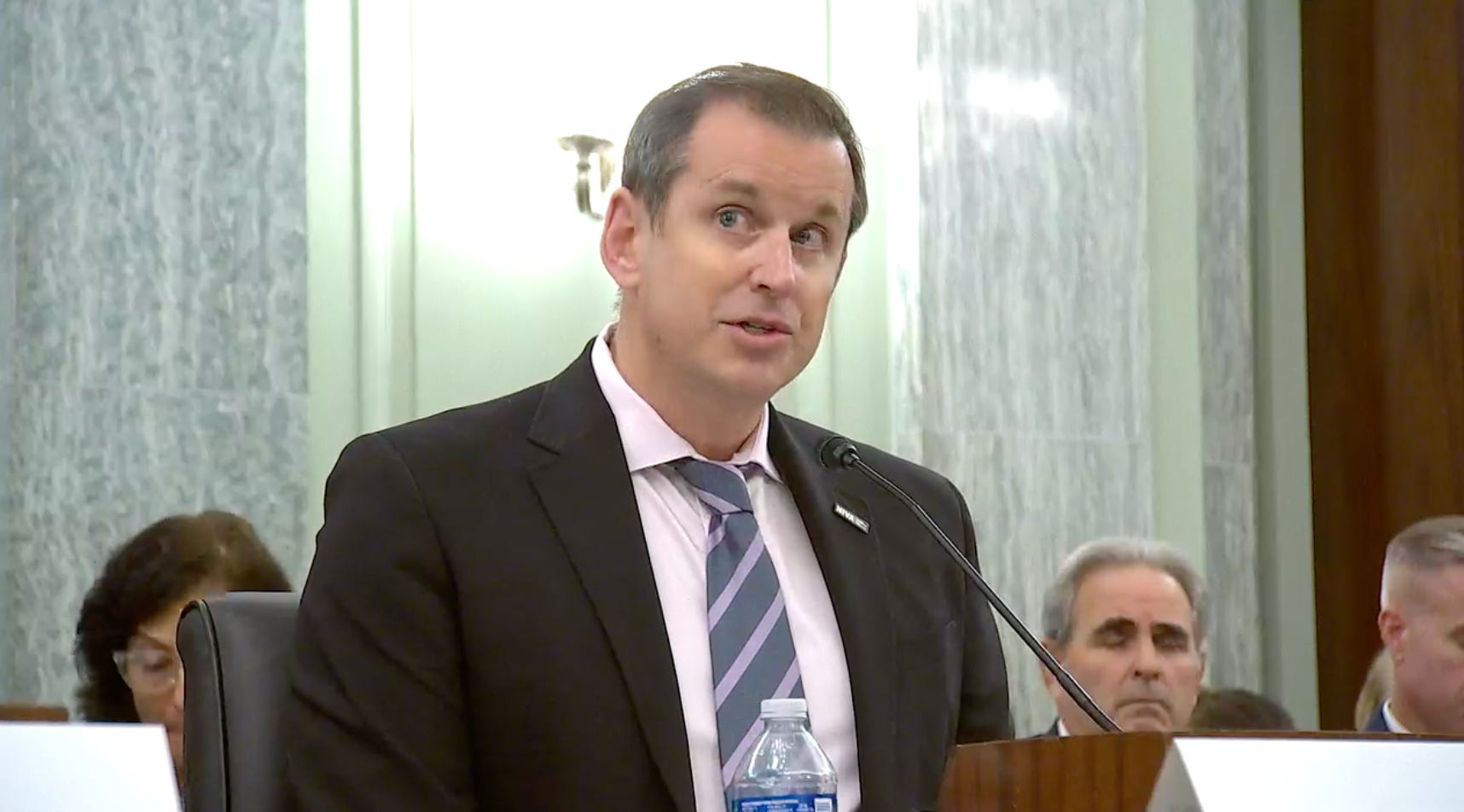
The fight against Ticketmaster and Live Nation’s live music monopoly is happening everywhere, from city halls to federal courthouses. Last week, activists fighting for fairness in the industry took their fight to a hearing room inside the Russell office building catty corner to the Capitol and explained to the Senate Commerce Committee how Live Nation was making the industry’s ticket scalping problem worse.
Independent live music venues have been key voice in the battle against Live Nation’s dominance David Weingarden, a Colorado-based independent venue owner and the chair of the Colorado Independent Venue Association, whose dual roles have left him intimately familiar with the abuses of the Live Nation/Ticketmaster monopoly, and the predation of the secondary ticketing market, where ticket scalpers gobble up concert tickets to sell them to real fans at massive markups.
As a venue owner and advocate, Weingarden has experienced the panoply of Live Nation’s monopoly tactics: all-or-nothing tours in which Live Nation’s hundreds of managed artists tour only at Live Nation venues and use only Ticketmaster ticketing; the company’s anti-competitive “radius clauses,” in which Live Nation’s touring artists can’t perform at independent venues within a certain mile radius of their show at a Live Nation venue; Live Nation threatening independent venues that they’ll lose access to Live Nation artists if they don’t use Ticketmaster; and on and on.
“When you have one company that controls that much…they’re a behemoth, and it makes things very difficult for independent promoters,” Weingarden told the committee.
The secondary ticketing market piles one problem on top of another for venues and fans. Fans that don’t get ripped off by Ticketmaster often have the pleasure of getting doubly ripped off by Stubhub and the rest of the secondary ticket aftermarket — or conned into buying a speculative ticket that the scalper doesn’t actually own. For independent venues, they’re left holding the bag when a fan buys a fake ticket for seats that don’t exist or a show that isn’t actually happening. As Weingarden explained in testimony, these multi-billion dollar aftermarket ticketing sites rake in fees while many independent venues are scraping by, trying to keep the music industry afloat.
Ticketmaster’s obviously an outright monopolist in primary ticket sales for all kinds of events, from indie concerts to the literal Super Bowl. It controls at least 80 percent of the primary ticketing market — dominance like few other companies anywhere (it also controls more than 250 venues and manages more than 400 major artists, for those keeping track of the behemoths’ full ecosystem). But there’s too much money in the secondary scalper ticket market to keep Ticketmaster away. An FTC lawsuit from earlier this year detailed Ticketmaster’s shady dealings in the secondary market: While it purports to ban scalpers and queue-jumping bots, it secretly allows, and in some ways assists, scalpers to hawk thousands of event tickets. The ticket scalpers then sell those same tickets at steep markups on Ticketmaster’s platform, ripping off music and sports fans while allowing Ticketmaster to double-dip by charging another round of its outrageously-high fees. It’s a scam perpetuated by Ticketmaster’s near-stranglehold on the primary ticketing market and its outright refusal to stop scalpers.
“Independent venues have been crushed. Artists have lost leverage. Fans are paying more than ever and getting blamed for it.” - Kid Rock, actually.
Weingarden had company during the hearing. Alongside him was none other than Kid Rock himself, the 2000s country/rock superstar whose birth certificate reads Robert Ritchie. Ritchie has been a vocal supporter of ticketing reform for ages now, but his testimony to the Senate was particularly sharp and direct. He outlined the history of the Live Nation/Ticketmaster monopoly, including the companies’ promise that their 2009 merger would lead to lower prices and a better experience for artists. “Needless to say, that experiment has failed miserably,” Ritchie told the committee. “Independent venues have been crushed. Artists have lost leverage. Fans are paying more than ever and getting blamed for it.”
They were joined by Brian Berry from Ticket Policy Forum, an advocacy group that shills for Stubhub, SeatGeek and other secondary sites. Of course, Berry pushed the narrative that those ticket hawkers are actually doing fans a service and drove out shadier scalpers and counterfeiters. He also made clear that Live Nation and Ticketmaster are wrecking the live music ecosystem. Among other charges, he said that venues who drop Ticketmaster for another ticketing service lose access to five major Live Nation concerts a year on average, or around $1.5 million in revenue. “This vertical dominance means Live Nation/Ticketmaster is not merely a player - it is the rule maker, the gatekeeper, and the toll collector,” Berry told the committee.
Dan Wall, a senior executive from Live Nation, also testified. He said that, despite what everyone says, the live music industry is doing great and fans are getting great deals out there — and if they are unhappy with prices or access, they should blame the secondary market!
You can watch the full hearing here.
Weingarden, Ritchie, Berry and others at the hearing pointed to the possible solution: An ongoing Justice Department lawsuit aiming to break up Live Nation and Ticketmaster to restore competition to the industry. At the moment, that case is in the hands of Judge Arun Subramanian, the Manhattan federal judge overseeing the case. Live Nation asked the court to toss the case ahead of its March trial date. We’ll keep an eye on it.
Geez, it's even worse than it was 10-20 years ago, when there were still a few alternatives to Ticketmaster. The statement from Live Nation that "the live music industry is doing great and fans are getting great deals out there" is utter nonsense.
Strong piece on vertical integration gone wild. The double-dipping mechanic here is particularly insidious, Ticketmaster bans bots publicly while secretly facilitating scalpers to extract fees twice from the same transaction. I worked with a venue that lost three major bookings after switching ticketers, exactly like Berry described. What makes this harder to fix is how radius clauses and bundled touring create lockin that survives even a breakup unless theres structural seperation.