


“The whole world is held together, really it is held together, by the love and the passion of a very few people.” - James Baldwin
It’s been a cold spring in the northern plains of the Midwest, and the long stretch of rural highway between Fargo, North Dakota and Grygla, Minnesota is bathed in the beige of wilted grass, barren trees, and last year’s harvest. In the creek beds and roadside ditches, hints of new green grass erupt through the dry dirt, but only just. In the desolate cold, life persists.
The Grygla General Store sits on a side road just off of East State Street, the main thoroughfare in this town of around 180 residents. Folks here have shopped the shelves at the general store for more than a century. On first glance, the shop looks like a well-stocked convenience store; snacks and packaged pastries fill the end cap shelves that face the door. A roller grill turns hot dogs endlessly. Coolers full of single-serve drinks hum nearby. But just past the entrance, the general store slowly reveals its true self. Turn a corner, and there are the coolers of fresh meat and produce near the back. Another corner, and you’re suddenly inside a hardware store, where rows of bins hold fasteners, while others brim with seeds hungry for warmer weather. A wall of paint color samples peeks through another threshold and, just beyond, there’s a gift shop filled with bags of locally-roasted coffee and racks of t-shirts screenprinted nearby.
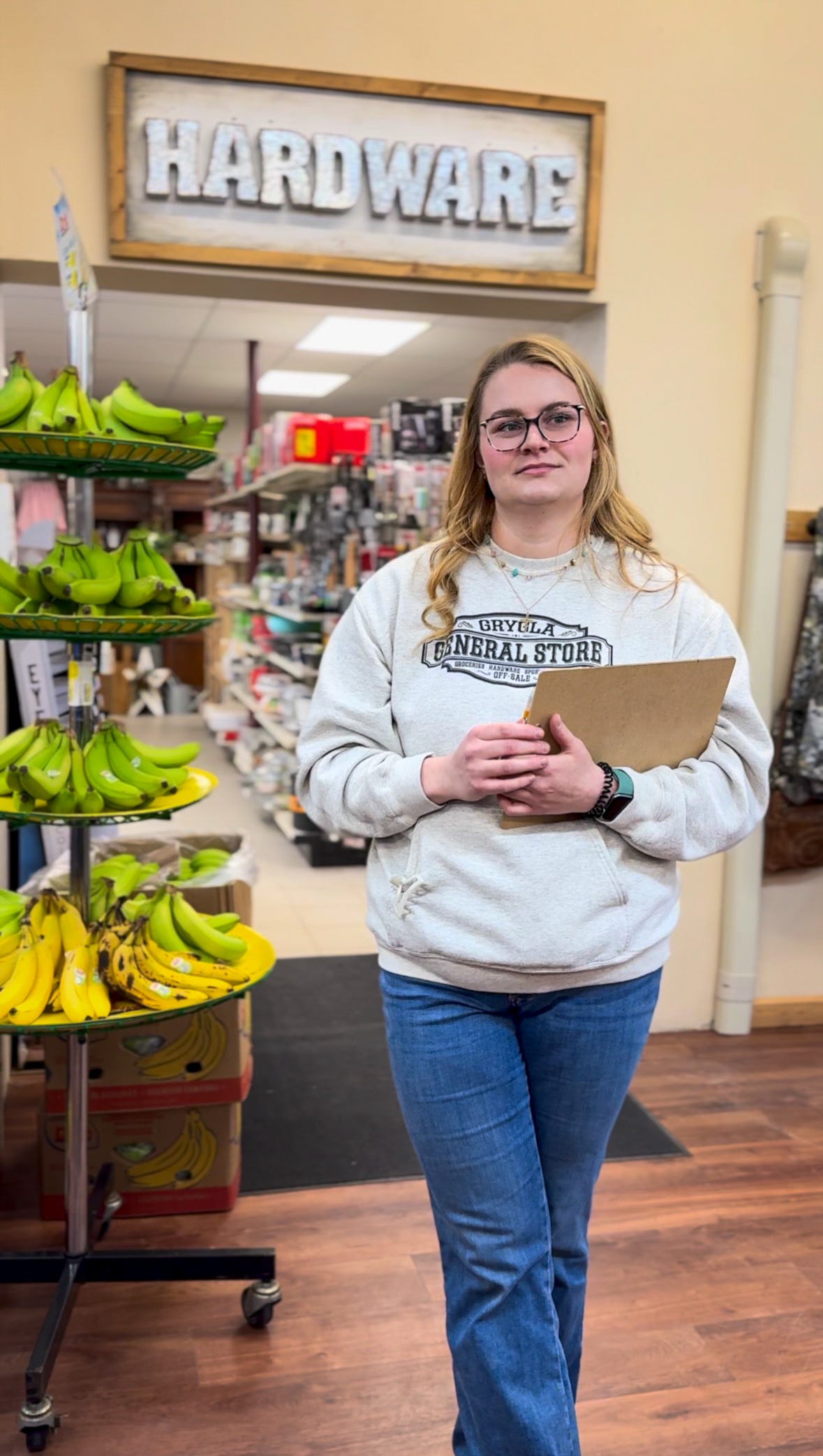
Cheyenne Irlbeck is showing us around. We’re touring the store as part of the Rural Grocery Summit, an annual gathering of small town grocers, suppliers, distributors, and rural food access advocates being held in Fargo this year. Irlbeck seems happy to host. She bought the general store a month after she graduated from the University of Minnesota in 2022. She never thought she’d own a grocery store. She comes from a farming family, and she thought she might end up selling agriculture insurance or some such. The farmer who sold her the store only bought it himself to keep it from being turned it into a parking lot. When he suggested to Irlbeck that she take over the store, Irlbeck ran with the idea. She made operating the Grygla General Store her senior year capstone project.
Running a do-it-all store in the smallest of small towns isn’t easy. The building is a century old, and some of the equipment in the store is starting to show its age. Last week, she had a pizza freezer go down. She’s got a new one on the way, but it’s not here yet. In the spring, when the winter snow that collects on the store’s roof melts, it can look like a swimming pool up there, she says. She’s trying to get a grant to add pitch to the roof to help the water drain, but nothing’s stuck yet.
There’s also a Walmart about 45 minutes away in Thief River Falls that she has to contend with. It’s in a town where lots of local folks work, so it’s convenient for people to shop there, too, and Irlbeck knows that. It’s part of the persistent economic conundrum of running a store in a small town without a big hub for jobs and industry. People commute, they go to the dentist, the come and go for lots of reasons. Sometimes, their money leaves with them and doesn’t come back.
The population here is changing, too. High schoolers graduate and move on. At the moment, she has ten workers in her store. She’d like to have about 15 or so to make sure everything gets done, but the students she’d typically hire are off traveling for the summer this year, so more of the work falls to her. Other folks here in Grygla are getting on in age, and some struggle to make it out of the house, let alone to the Walmart miles away.
So Irlbeck does whatever she can to help. She doesn’t advertise it, but if people nearby need their groceries delivered because they can’t get out, she’ll do it. If there’s something she doesn’t carry, she’ll order it to the store and make sure it gets to them. It’s been the mission of the store since it first opened. It’s had different names, sometimes different merchandise — it sold shoes for a while. Irlbeck says that, regardless of the name or the format, the store has always revolved around the community, and vice versa. “We’re not making shoes any more,” she tells us. “But I can order some in for you if you need them.”
***
Erskine, Minnesota is about an hour’s drive south of Grygla. A quaint town of around 400, life here mainly revolves around farms and water. There are five lakes within a few miles of the store, including one right across the street, and people travel to the area to fish, hunt and boat — “cabin dwellers,” folks around here tend to say. The town’s logo is a happy-looking northern pike, and every May, people flock to the annual Erskine Water Carnival, where classic cars and tractors gleam in the streets and fireworks ignite the night sky above Lake Cameron.
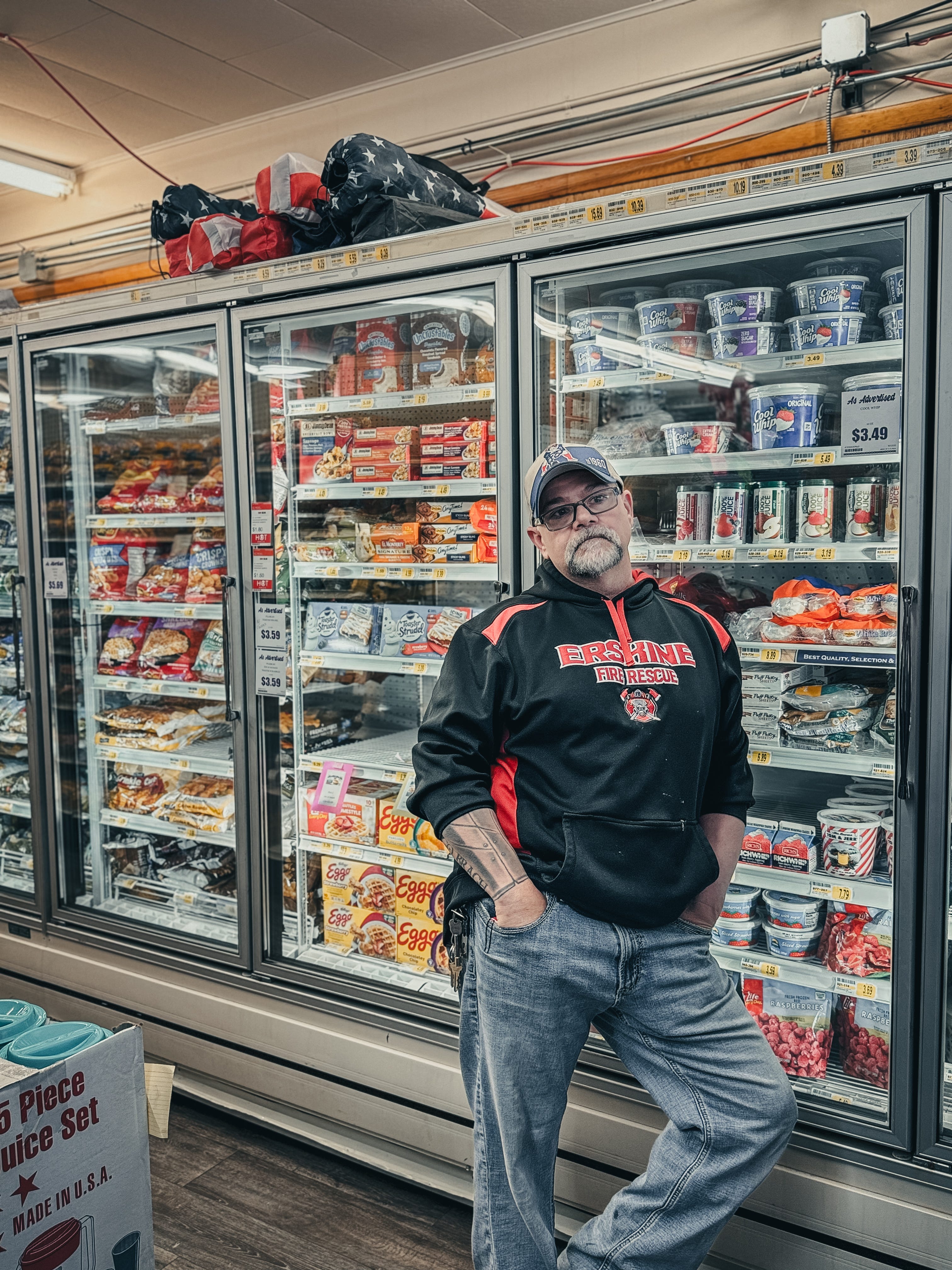
Jason Beckett runs Groceries Plus in Erskine, a full service grocery store in the town’s main commercial district. The store is compact and straightforward. The few aisles host all of your staples — breads, cereals, cans of soup and veggies, chips and snacks. End cap displays feature this and that. One display offers shoppers sunglasses and antifreeze, Crocs and chemical toe warmers. Business here transforms with the seasons. Lots of tourists walk through the doors of Groceries Plus in the summer. The winters are tough, but the summers can make up for it.
Things have changed here in Erskine. Back in the 1970s and 80s, four grocery stores and a butcher shop served the town and its visitors. But there were lots more farms nearby back then. After years of consolidation, today two big farms encircle Erskine; the need for more grocers left along with those farmers and workers. There are still smaller farmers nearby; kids still show up in the summertime to sell sweet corn in front of the store. But there aren’t as many small farms as there used to be. Beckett and Groceries Plus is the only full-service grocer left in town.
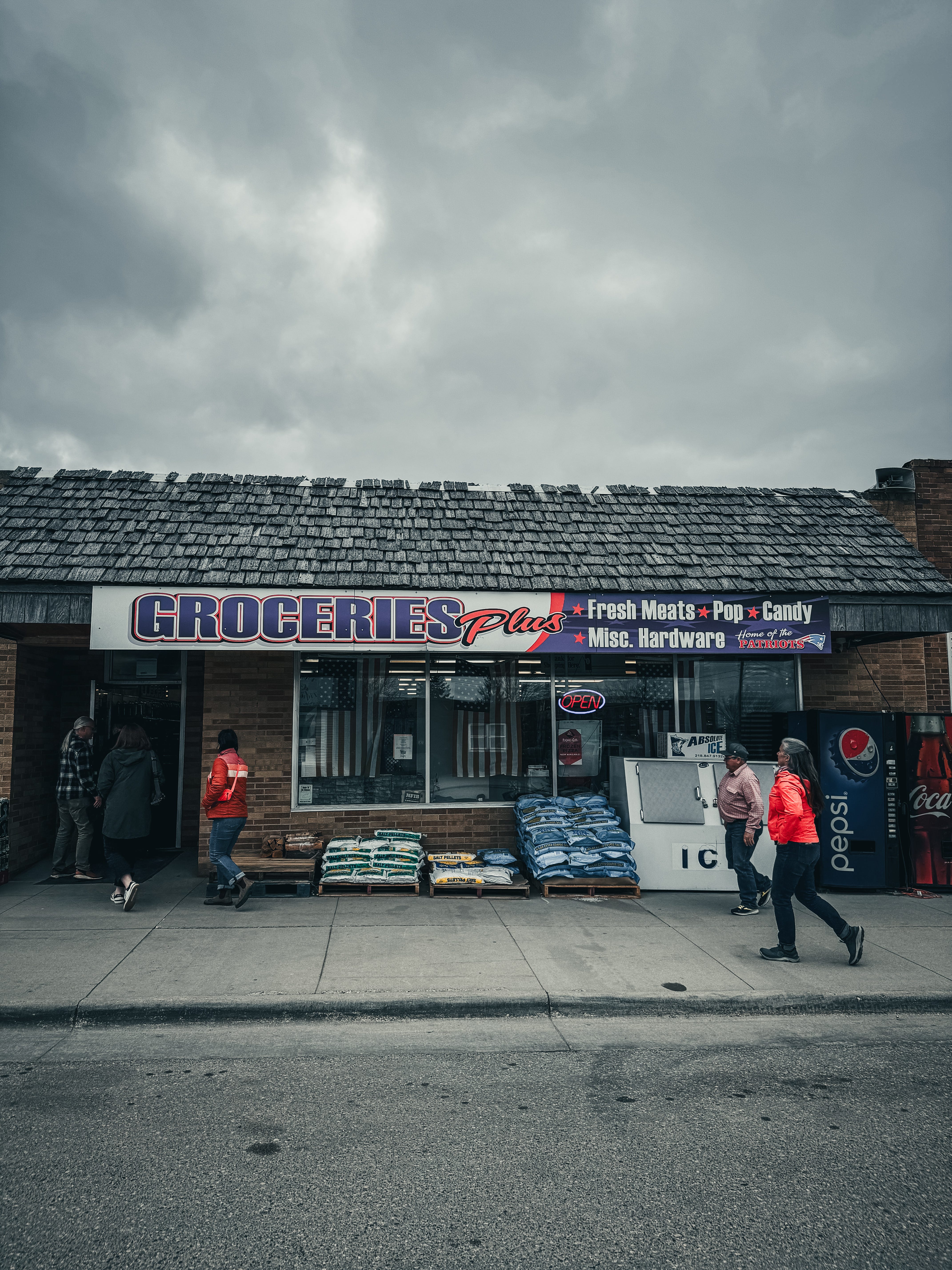
Beckett says that, a few years back, he had big plans for the store. They were working to expand into the defunct laundromat next door. Then, six years ago, a Dollar General opened two blocks away. The dollar store doesn’t offer the fresh meat and produce Beckett does. Like most chain dollar stores, Dollar General sells little besides processed, shelf-stable foods. Still, the store’s opening rocked business at Groceries Plus. Sales fell 46 percent the first year. Things have stabilized since then, but it’s not the same. “Dollar General really killed us,” Beckett says.
Just like the nearby Walmart, the chain dollar stores have built their businesses on systemic unfairness. They use their size and power not only to get better prices from suppliers, but to coax suppliers into charging more to stores like Beckett’s and their wholesalers — either explicitly or tacitly. It’s not legal, but the ban on that kind of discrimination has been rarely enforced over the past half-century, so the chain stores get away with it. Today, the Dollar General in Erskine sells a case of soda to customers for less than what Groceries Plus pays its distributor for the same case. It sucks, and it isn’t fair, but right now it’s reality for so many rural grocers.
Beckett still has a job to do, and the store still has a community to serve. Like other small grocers, Beckett keeps shoppers coming back with service. He does pretty much whatever his customers ask, because he know stores like Dollar General won’t. He delivers groceries through The Dancing Sky Area Agency on Aging, a regional program that aims to help older folks stay in their homes. He drives groceries to 22 people in six surrounding counties, about a hundred miles worth of driving all in all. It’s part of what ties rural grocers to their towns: service to customers instead of shareholders.
Beckett has done it all in his 15 years at Groceries Plus, and he’ll probably do it again. “I’ve taken people to get their hair done,” he quips to the tour group. “You can’t say no.”
For the first time in decades, there’s real support for stopping the kind of backroom deals Walmart and the dollar stores force on their suppliers — the kind that so often force small grocers out of business and leave communities without the crucial services grocers like Beckett and Irlbeck provide. Elected officials want the deals stopped. Lawsuits are winding their way through the courts. State lawmakers are looking for ways to end those sweetheart deals within their borders — including in Minnesota, where a new, proposed law would bring rural grocers and their wholesalers some relief. There’s still a long way to go, but people nationwide, from all walks of life and political persuasions, are fighting for fairness for the first time in a long time.
The drive back towards the North Dakota border winds through the White Earth Indian Reservation, spread across three counties in the northwest of the state. Community members here harvest and process wild rice by hand, some of which is cleaned and sold at Native Harvest, a shop in Callaway, Minnesota, that shares a building with the local tribal radio station. The rice looks like some distant relative of the bleached, compact grains you see at most stores — its long, slender grains, all in shades of tan and black, seem to teem with vital stuff. The rice looks like it, and it alone, could sustain a community.
Back across the North Dakota border, the vast, flat prairie under the impossibly wide sky offers glimmers of life renewed. The branches of a few trees are bursting with flowers that will clear the way for fresh green leaves. The pockets of prairie trees here appear fuller, denser, with buds swelling in the cool air. Spring is coming — and with it, hope.