


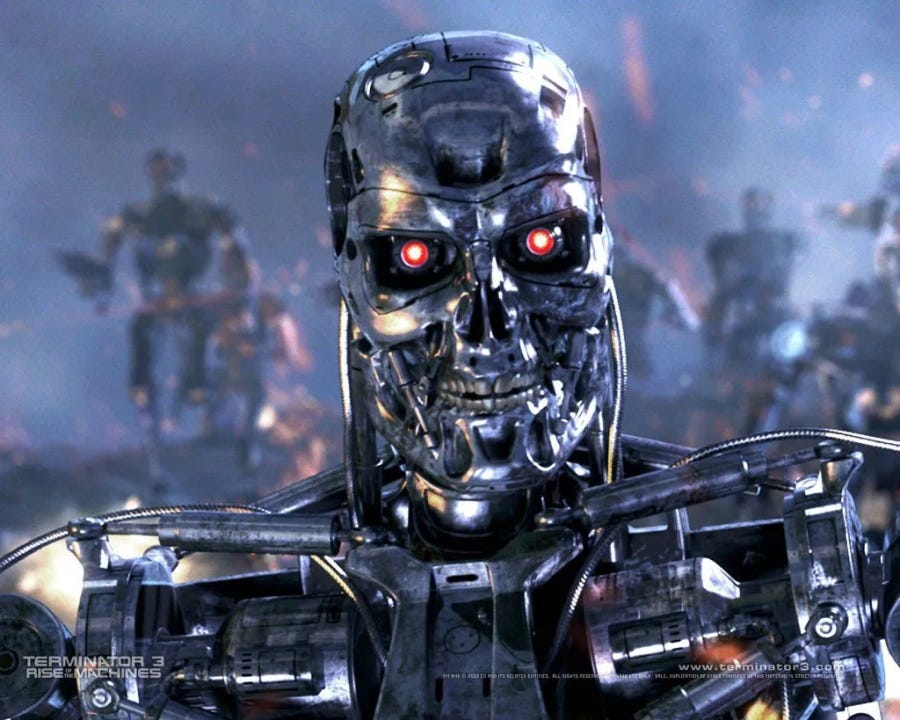
For folks interested in monopoly and corporate power, what are we to make of the wave of AI doomer panic? Taken at face value, AI engineers and executives’ dire predictions of AI’s extinction-level dangers are more existential than our seemingly pedestrian fears about corporate domination. These are science fiction-level warnings of machine-led global catastrophe that need science fiction-level solutions, far beyond any discussions of corporate governance or runaway market power.
Right? Well, no. I mean, probably not. Let me explain.
Former and current researchers and scientists from frontier AI companies this week have stoked fears that those companies’ unconstrained AI advancements will lead to superintelligence extending far beyond the limits of human control and understanding, rapidly leading to AI models generating more advanced versions of themselves without human participation. Were these predictions to come to pass, independent AI systems could hack anything, corral its own resources, and potentially threaten humanity. Again, this is the stuff of science fiction, made vastly more real by the warnings of scientists working at Anthropic and OpenAI on exactly those kinds of frontier models.
Seemingly everyone with a computer and an internet connection has weighed in on the possibility of an AI-fueled extinction event and what we should do about it, from Kamala Harris, to Republican Sen. John Kennedy, to a whole cadre of folks interested in corporate power and governance. Harris has called for an AI “slowdown,” whatever that might mean. Kennedy has readied a bill that would require frontier AI companies to build a “kill switch” into their models. Senator Bernie Sanders and Rep. Greg Casar floated a bill that would ban AI superintelligence and pause AI development entirely.
Among pundits and academics, reactions online and in the media have oscillated between “AI will trigger doomsday” and “this is a psyop orchestrated by Big Tech.” I believe both things are more or less true. The AI researchers and executives whose grave concerns have stoked global fears can look at the trajectory of frontier models and envision a near future where those models, on their own or coupled with human ill-intent, do something to put us all in danger. But I also believe that the sudden chorus of voices from the tech world calling for AI regulation are driven by fear — not fear of what the technology might portend for humanity, but fear that governments might shut AI development down completely. That the mass movement against data centers might turn into a mass movement against data centers’ main output. That investors will get spooked by the risks and backlash and that AIs seemingly-eternal money spigot might suddenly dry up.
Whichever thing you believe — that AI is going to kill us all, or that the AI powers are just clamoring for a government bailout and a moat around their businesses — this is ultimately a corporate power challenge. AI’s speculative fiction problem is just another predictable effect of the government’s refusal to regulate danger out of industry and take on runaway corporate power, even when it becomes an obvious problem. And no matter which version of the AI threat story you believe, the solutions take about the same shape.
Whichever thing you believe — that AI is going to kill us all, or that the AI powers are just clamoring for a government bailout and a moat around their businesses — this is ultimately a corporate power challenge.
History should be helpful here. There’s no perfect historical equivalent to the kind of industry-wide dangers AI poses today. Yes, we’ve built atomic bombs and war machines of all varieties, and we’ve come up with untold numbers of ways to poison the ground and the air and the water, all of which we need to continue living on Earth. But never before in human history have we created an ostensibly beneficial industry out of whole cloth that so quickly and thoroughly threatened our very existence.
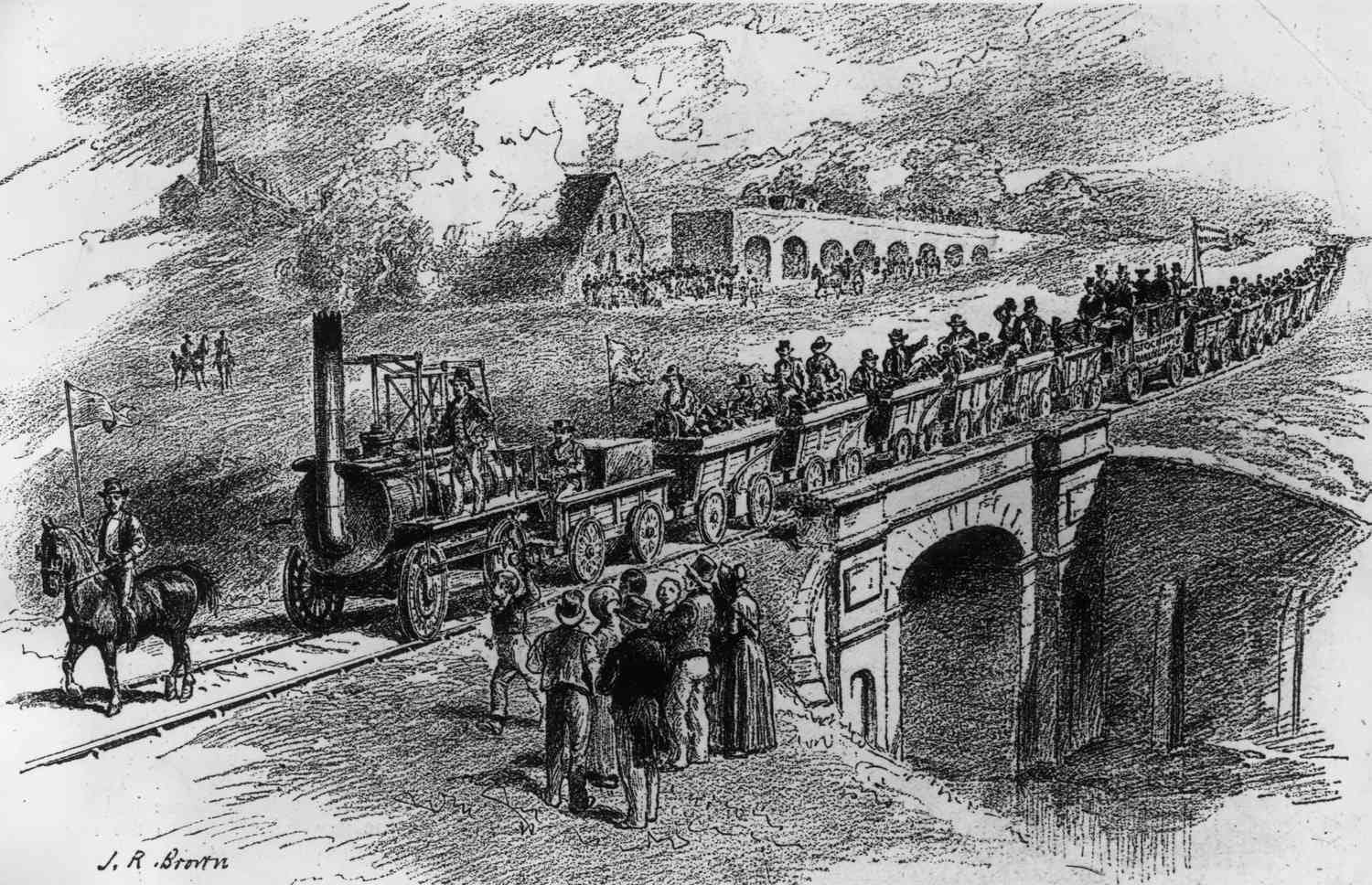
But there are examples throughout history of revolutionary industries that upended life the way AI has done and will continue to do, and which triggered swift government action to control it. Railroads might come the closest to the trajectory of AI today. In the wake of the Civil War, the rapid deployment of railroads had a similar, transformative impact on American society and the economy. The unfurling of rail transportation across the Plains and the West gave many Americans their first taste of real corporate power, with the ability to control commerce and livelihoods that comes with infrastructure dominance. Suddenly, farmers from Minnesota to Texas found their profits slashed as they paid exorbitant, monopoly rates for carriage on the rail lines. Merchants and shoppers also faced a newfound tax on their lives from these sudden, intrusive corporate behemoths.
Outraged at the railroads’ exploitation, the public turned to lawmakers for answers. Farmers wielded significant power at the time. Agriculture accounted for more than half of all industrial jobs in America in the 1880s, and the “granger” movement swept the Midwest during those post-Civil War decades largely in response to the rise and power of the railroads. Newspaper publisher W.W. Corbett, an early champion of the antimonopoly movement, in 1870 called for producers to “devis[e] a means to combat the vast railroad monopolies that threaten to overwhelm the county.” They organized, and the power of the granges, the Farmer’s Alliance and other agrarian movements pushed officials to act. Lawmakers in Illinois, Iowa, Minnesota and Wisconsin passed laws banning predatory carriage rates. A decade of anti-railroad outcry led Congress to create the Interstate Commerce Commission in 1887, which banned rate discrimination and other predatory practices. It was the country’s first fully-independent regulatory agency and served as the model for, among other agencies, the trustbusting Federal Trade Commission.
As with the advent of the FTC, to control AI we’ll likely need both a law and an agency to enforce it. I’m not generally in favor of new government agencies when there are existing agencies more than capable of doing the same work. I don’t think, for example, that we need a big tech regulator when a well-staffed FTC can regulate the industry just as effectively. But I think a new federal AI agency, staffed with a combination of AI researchers and scientists, infrastructure-level systems experts, and trustbusters, seems like a reasonable first step to creating and enforcing safeguards against the hyper-development of AI models that can threaten humanity. Maybe this new agency grows and the need for perpetual oversight deepens, and like agriculture and transportation, an AI czar becomes a cabinet-level position.
The priority for any AI regulatory system: defend human existence from the myriad threats that advanced artificial general intelligence poses. Pass strong, and enforceable laws, then create a federal agency that can enforce domestic regulations and draft and enact global, multi-state treaties to slow or halt advancements in AI models and restrict what AI can be used for. That’s the baseline for what is needed now. But beyond that, a federal AI agency could and should address the other, less existential threats AI poses, including potential widespread job loss, the rampant infringement of copyright and intellectual property protections, and so on. An AI regulator would have extensive work to do to safeguard humanity from the threats advanced AI poses — evidence enough for the need for such an agency.
Can government constrain frontier AI, an industry screaming for constraints even before the human extinction predictions?
The US, of course, is not alone in developing and deploying AI models. China’s open-source models are developing quickly. Is rapid, global regulatory action likely? Probably not. Our current administration is largely antagonistic to mutli-party cooperation among nations. While the original motivation for modern nationalism makes some sense when it comes to parts of the traditional industrial economy — rehoming manufacturing and strengthening local systems of production and distribution, for example — it will hamper any effort to agree upon a common-sense multinational approach to an AI slowdown or prohibitions. It’s a shame, but here we are.
If there is no pathway to a global agreement on AI regulation, we must at least start at home. I take seriously the threat of recursive self-improvement; that’s a threshold we likely do not want to cross, regardless of whether you view AI as an existential threat or a transformative, investment-worthy industry. Can we stop frontier AI models before we get to the point of self-improvement, using all of the democratic levers we’ve used in the past to constrain transformative industries — to step in front of the runaway train, as it were? Maybe, but boy would we have to move quickly. I’ve been studying monopoly power and government regulation for two decades and I’ve never seen government move particularly quickly, other than to remove regulations and unleash capital.
That lone exception, in my mind, is the four years of the Biden Administration, during which motivated antimonopolists took the helm of the federal antitrust agencies and quickly deployed new rules and filed major lawsuits with the aim of deconcentrating and democratizing industry. There’s a reason so many formerly-oppositional corporations and CEOs have fallen in line behind the second Trump Administration. They saw that government could actually reign in corporate power if it wanted to and it scared the hell out of them.
Can government again challenge corporate power, this time to constrain frontier AI, an industry screaming for constraints even before the human extinction predictions? The initial response of the Trump Administration doesn’t bode well; Trump called AI doomerism a “hoax” and said he wasn’t interested in discussing any safeguards. Congress seems interested, but getting federal lawmakers to take action on anything at all seems far fetched.
So now what? Well, the worst thing AI companies and the lawmakers and regulators overseeing the industry could do is pretend like current laws on the books don’t apply to the industry. As former FTC chair Lina Khan and others have pointed out, advanced AI models may already be infringing consumer protection, antitrust, and other corporate laws and regulations. Federal and state-level enforcers can and should enforce these laws vigorously, including any criminal laws against cartels and collusion. Any illicit cooperation between AI companies would break antitrust law absent a Congressional or regulatory mandate to do so. I do think there must be alignment between the frontier AI developers, but leaving industries to regulate themselves has failed again and again. The lure of investment and riches is too powerful.
If the frontier AI companies want to pause or slow model development on their own accord, fine, but ultimately the guardrails around how these companies are structured and how quickly they can push the limits of model advancement must fall to government regulation and enforcement. We have rules for most every industry; AI can’t be different. And the punishments for breaking those rules must be just as severe as the threat that rulebreaking poses to society.
As I've said elsewhere, the AI industry should have been regulated yesterday. We - I mean the U.S. government is way behind, just as it is with the equally important global issue of climate change. It doesn't help that we have a leader who believes everything is a hoax and isn't taking things seriously. The solutions we need will fall to the next administration... I hope.